
Views: 0 Author: Site Editor Publish Time: 2025-11-20 Origin: Site


For distributors and retailers, a product return is more than just a refund. It's a loss of profit, wasted logistics costs, a damaged brand reputation, and, ultimately, a dissatisfied customer who may never return. In the garden tool industry, the line between a one-season disappointment and a lifelong tool is drawn in the details of its construction.
By understanding the core principles of durable digging tool manufacturing, you can make informed sourcing decisions, confidently market superior products, and dramatically reduce your return rates. This guide delves into the critical components that separate professional-grade tools from the rest.
The blade is the business end of any digging tool. Its material and treatment dictate its lifespan.
A. Material Grade Matters:
Avoid: Low-carbon, mild steel. It is soft, easily bent, and will dull quickly, leading to frustrated customers.
Source Instead: High-Carbon Steel. This is the industry standard for durability. It can be heat-treated to achieve an optimal balance of hardness (for edge retention) and toughness (to resist bending and cracking).
B. The Manufacturing Process: Forged vs. Stamped
Stamped Blades: Cut from a sheet of steel like a cookie cutter. This creates a thin, uniform blade that lacks strength and is prone to bending at the neck.
Forged Blades (The Gold Standard): Heated steel is pounded into shape under immense pressure in a drop forge. This process:
Aligns the Grain Structure: Makes the metal denser and stronger.
Creates a Reinforced Neck: The transition from blade to socket is thickened and strengthened, preventing failure at this critical stress point.
A broken handle is one of the most common reasons for returns.
A. Wood Handles – The Classic Choice:
Look for Straight Grain: The lines in the wood should run parallel to the handle's length. Wood is strongest along its grain; curved or short grains create weak points.
Wood Type is Key:
Ash Wood: The premium choice. Known for its exceptional strength-to-weight ratio, flexibility, and shock absorption.
Hickory: Very strong and hard, but can be heavier and less flexible than Ash.
Avoid: Unsealed, low-density woods that feel lightweight and splinter easily.
B. Fiberglass Handles – The Modern Contender:
Look for a Solid Core: The fiberglass should feel solid, not hollow or thin-walled.
Check the Textured Grip: A permanently molded, non-slip grip is essential for safety and comfort. Avoid cheap, slide-on grips that can twist or rot.
Key Advantage: Immune to rot, moisture, and drying out.
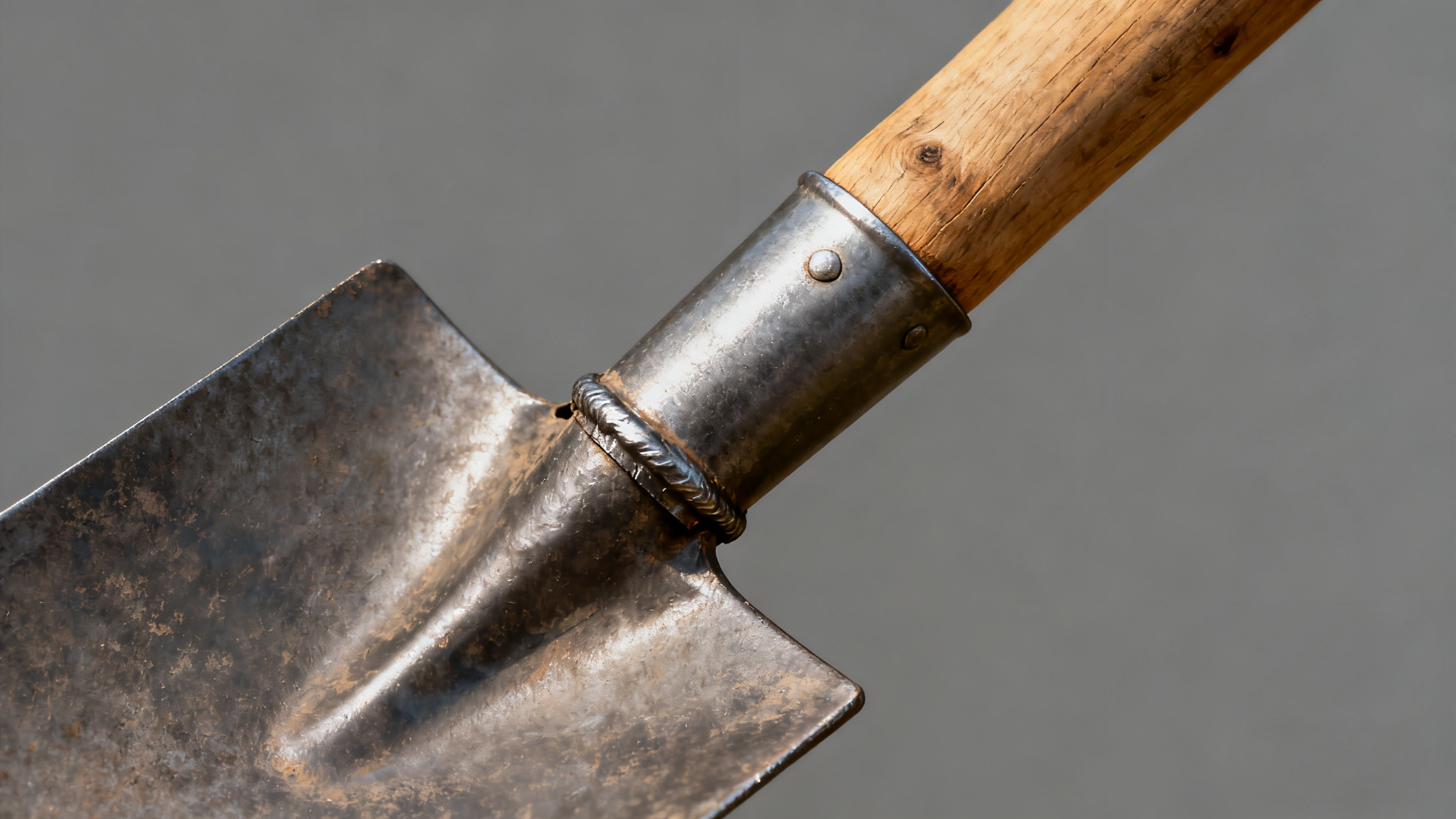
Where the handle meets the head is the number one failure point on cheap tools. This is where quality manufacturing is non-negotiable.
The Superior Solution: Solid Socket & Riveting
The Socket: The metal part that receives the handle should be a solid, forged loop, not a closed tube or a thin, open strap.
The Connection: The handle is secured through the socket with heavy-duty steel rivets. This creates a mechanical, permanent lock that won't loosen over time.
Avoid These Weak Connections:
Pinched or Stapled Connections: A thin metal strap is pinched or stapled around a handle. This offers minimal strength and will loosen quickly.
Adhesive-Only Connections: Glue alone cannot withstand the shock and leverage of digging.
A tool that rusts after one season is a guaranteed return.
The Finish: A high-quality powder coat or epoxy paint is far superior to thin, spray-on paint. It provides a thick, durable, and corrosion-resistant barrier that won't chip easily.
The Edge: For cutting tools like trenching shovels, look for a sharp, properly ground edge that is ready for use, not a blunt, unfinished one.
Arm yourself with these questions to vet potential suppliers and ensure you are sourcing durable, low-return products:
"Are your digging tool heads drop-forged from high-carbon steel?" (This confirms strength and material.)
"Can you describe your handle connection system? Is it a solid socket with rivets?" (This targets the #1 failure point.)
"What type of wood do you use for handles, and how do you ensure grain alignment?" (This shows an attention to detail.)
"What is your corrosion resistance process? Is it a powder coat finish?" (This addresses longevity and appearance.)
"Do you have a specific quality control check for handle integrity and weld/socket strength?" (This reveals their commitment to consistency.)
Reducing product returns isn't about luck; it's about strategy. By partnering with manufacturers who prioritize forged construction, solid socket connections, and high-integrity materials, you invest in more than just inventory—you invest in customer satisfaction, brand loyalty, and long-term profitability.
A durable tool doesn't just avoid being returned; it becomes a silent salesperson for your business, generating positive word-of-mouth and repeat customers for years to come.
Partner with a Manufacturer Built on Durability
At Hantechn, we engineer our digging tools to the exact standards outlined in this guide. Every tool features:
Drop-Forged, High-Carbon Steel heads.
Reinforced Solid Socket connections secured with heavy-duty rivets.
Select-Grade Ash Wood or Solid Core Fiberglass handles.
Durable Powder Coat finishes for maximum corrosion resistance.
We build our tools to last, so your business can grow with confidence and minimal returns.
[Request a Sample & Wholesale Catalog] to see and test the Hantechn difference for yourself. Let's build a partnership on a foundation of quality.


